

Slot-Together Displays Explained: From Flat Box to Shop Floor
Slot-together displays arrive flat and leave as solid shop furniture. They have become a quiet favourite with Irish independents, pharmacies, gift shops and food brands that want a premium wooden look without a fit-out crew. As the exclusive ESPOSIT distributor for Ireland and the UK, we get asked the same questions every week: how do they work, how strong are they, and which one suits my shop? Here are the answers.
Key takeaways
- Slot-together displays are precision-cut wooden panels that interlock through slots to form a rigid unit.
- They ship flat, which keeps delivery simple and lets you store or move them easily.
- The ESPOSIT range is designed and made in Italy, many models in eucalyptus or birch plywood.
- Styles cover floor units, counter units, rotating stands and adjustable shelving.
- Most can be branded with your logo.
Slot-together displays: how they work
Each display starts as flat sheets of plywood. The panels are cut with matching slots, so one panel locks into the next at a right angle. Shelves slide into the uprights and the panels brace each other, so the unit stands square and steady. The result is a unit that feels like solid furniture but packs back down flat when you need it to.
Why plywood?
Plywood is built from thin layers of wood glued with the grain running in alternating directions. That makes it stable, strong for its weight and less likely to warp than a single plank of the same thickness – exactly what you want from a display that holds bottles, jars and books all day.
The joints that make or break a display
ESPOSIT's designers like to say that the gap between a display that merely stands and one that truly works is measured in tenths of a millimetre. Every joint is chosen for the job its panel has to do:
- Dogbone joint – the classic CNC joint, with rounded cut-outs at the corners where the router bit turns. Strong and quick to produce, but the round ends stay visible, so the structure can upstage the product.
- Cross joint – two panels slotted into each other at right angles. Clean, straight cuts send the load straight down into the frame. A favourite for floor stands.
- Bayonet joint – the panel drops into its housing and locks with a small turn or slide. Used where nothing should shift, such as the back of a unit, and with no visible hardware.
- Hidden slot joint – the housing is cut inside the panel and stops short of the edge, so the joint disappears. Harder to make, but it gives the cleanest finish where sides, backs and product stops meet.


Tolerances and thickness
Cut a slot too tight and the unit is a fight to assemble and can split. Too loose and it wobbles. ESPOSIT works with panels from about 9 to 18 mm, chosen for the weight of the product, the size of the unit, how it travels and how often it will be taken apart. For many floor units, 9 mm is the sweet spot of strength, weight and precise joints. Trays and shelves are sometimes made thicker so they look and feel more solid.
From box to shop floor in four steps
- Unpack the flat panels and lay them out by size.
- Stand the uprights and slot in the base and back panels.
- Slide in the shelves or fit the hooks.
- Merchandise – heavier stock low, hero products at eye level.
Each product page lists dimensions and assembly details, so check before you order.
Which slot-together display fits your shop?
Floor units for main ranges
 Floor Display Unit – Inclino
Angled shelves for books, cards and packs
View product →
 Food Display Unit – Caos 940.5
46 × 35 × 161 cm
View product →
 Adjustable Floor Display Unit – Adapti 400
40 × 35 × 160 cm, adjustable shelves
View product →
Rotating stands for small, hanging lines
 Rotating Countertop Display Stand – Girevole Banco
Rotating spinner for small lines
View product →
Rotating Countertop Display Stand – Girevole Banco24 hooks, 9 mm eucalyptus wood
View product →
Adjustable shelving for changing ranges
If your stock changes with the seasons, adjustable units let you move shelves rather than buy new displays. See the full adjustable displays range.
What ESPOSIT has built with slot-together design
- Liix – a two-metre hook display for a German bicycle-accessory brand that splits into one-metre modules and ships flat on a single pallet. The back panel straddles the join between the modules and locks top and bottom together, so the stand behaves as one piece without a single screw.
- Lilliputiens – display, custom hooks and logo panel delivered as one flat-pack kit for the toy and gift brand, with the logo designed into the structure.
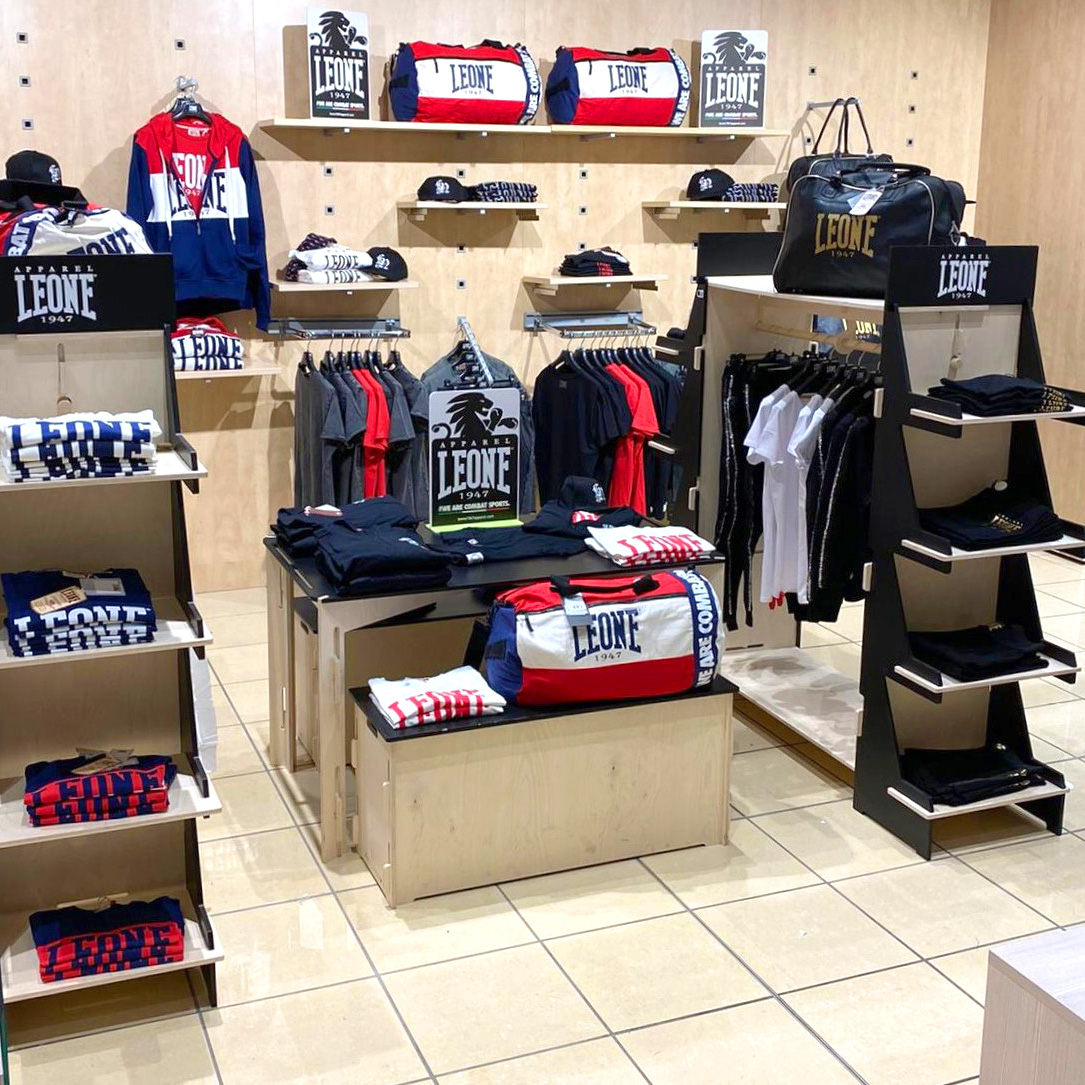
- Leone Apparel 1947 – complete wooden display corners for a 250 × 250 cm island, shipped on one pallet and assembled by store staff.
- Trade fairs – including the Juratoys stand at Toys Milano 2026.
…and what we build in Dublin
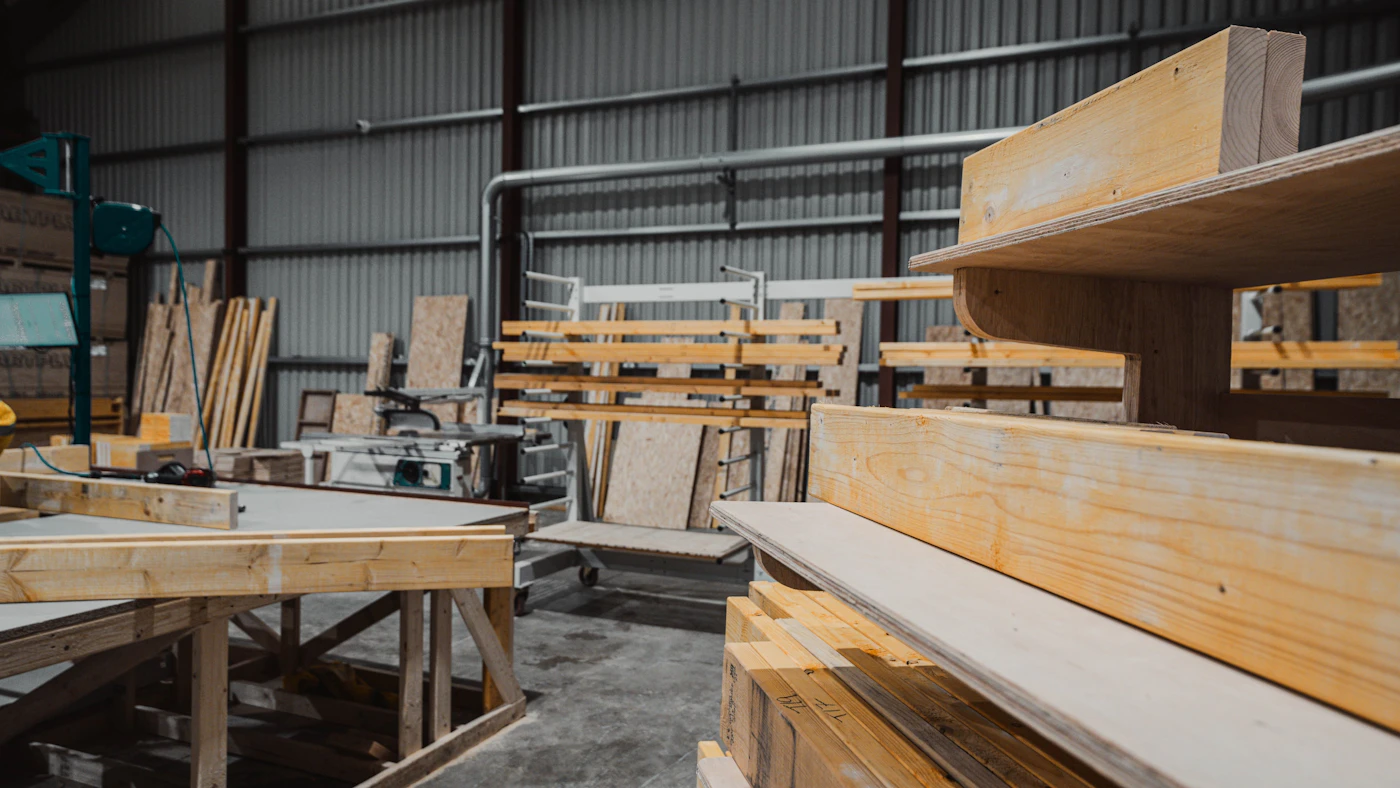
Alongside the ESPOSIT range, our own workshop makes bespoke solid-wood FSDUs and counter units for brands such as Jump Juice and Savorsmiths. When a catalogue unit is close but not quite right, we can often close the gap – a custom header, different shelf spacing, or your colours.


Branding your slot-together display
Plain natural wood suits most shops, but brands and chains often want more. Most ESPOSIT displays can carry an engraved or printed logo, and header boards can be swapped for each campaign. That makes them a strong choice for Irish food, drink and gift brands that supply several independents and want a consistent look in every store.
FAQ
Are slot-together displays strong enough for bottles and jars?
Yes, when you choose the right model. Many ESPOSIT units are designed for food, drink and bottle displays – check the product page for dimensions and use, or ask us.
Can they be taken apart and moved?
Yes. They are designed to slot together and come apart again, so you can move them between stores or store them off-season.
Where are ESPOSIT displays made?
ESPOSIT designs and manufactures its displays in Italy. We are the exclusive distributor for Ireland and the UK.
Do you also make bespoke displays?
Yes. If nothing in the range fits, we design and build bespoke solid wooden displays in Dublin. See our bespoke FSDU and bespoke CDU pages.
What thickness of plywood is used?
ESPOSIT units typically use panels between 9 and 18 mm, depending on the load and size. Each product page lists the details.
Browse the range: slot-together free-standing displays, slot-together counter displays and rotating displays – or talk to us about your shop.